UTX on Arrival OST
posted October 18, 2017 #
Coming up this Friday, October 20th, is the official release of the Arrival short film soundtrack. If you haven't watched the film or read me gushing over the score, please familiarize yourself and/or go order it.
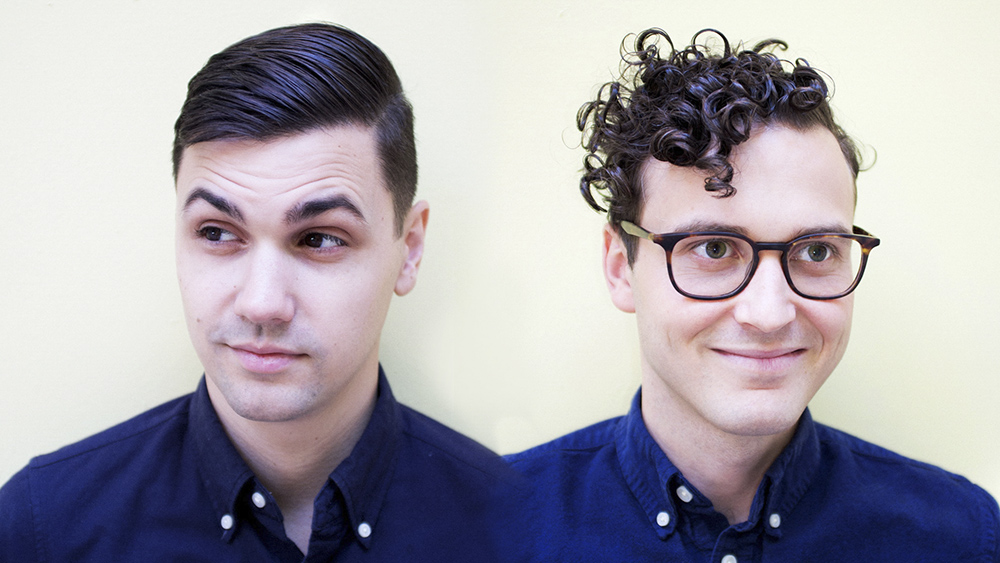
I sent some questions over to Ross Wariner and Cody Uhler of Upright T-Rex Music to find out more about the process behind the score creation.
YK: First off, how did you meet (Directory) Alex Myung and (Producer) Amy Benaroya?
Ross Wariner: Amy and I met at a party. I was telling some people about our company UTX and Amy said "we're making a short film and need sound!" Shortly after we all got together and it was a match made in heaven.
Did they already have the idea for the film? Was it in pre-production or were you involved from the very start?
They were already in production when we came on board. The animatic was maybe 20% complete? We slowly worked on the music as the animatic was coming together, and by the time we recorded the orchestral elements, it was animated.
You flew to Nashville to record the pieces - with Alex and Amy. How did this influence the rest of the film?
Overall, the experience of working with studios that we trust and friends that we love made the whole process a dream. We had a lot of music to record in a short amount of time, and having talented friends who are willing to put the extra effort in went a long way. The majority of players were friends from the Kindercastle / Uncle Skeleton days, and having them in studio really helped ease the stress that comes from recording that many cues in one day. We were lucky to have our great friend Larissa Maestro conduct as well.
What inspired the vibe and tone of the score? Being a dialogue-less film, that's a heavy weight to put on the music.
We used two directions to drive the score, a very nostalgic 1930's-1960's jazz-harmony based approach (Arrival Theme/Postcards) to give a sense of old-world wonderment and sadness, along with more modern electronic elements (Napkin and Spoon/Photo Surprise) to balance the organic elements and give it a modern and ambiguous quality. Having no dialog meant that we had to use a wider range of elements to define the different scenes and constantly reset the tone.
How much editing of the music was involved in the post-production? Or was the film edited around your music?
We edited everything to match the animations. We worked entirely from an animatic, so we were scoring to the second to match every action. I believe there might have been a few moments where the scenes were edited to better suit orchestral elements once we had recorded those, but for the most part is was editing music to match film.
What future scores can we look forward to? More Alex and Amy collaborations?
We will absolutely be working with Alex and Amy on any future projects they have coming up, we became great friends through this process. As for us, we are currently wrapping up the score for the next Dots game, which also features an orchestra that we recorded down in Nashville. The game should be out in early 2018.
I sent some questions over to Ross Wariner and Cody Uhler of Upright T-Rex Music to find out more about the process behind the score creation.
Ross Wariner: Amy and I met at a party. I was telling some people about our company UTX and Amy said "we're making a short film and need sound!" Shortly after we all got together and it was a match made in heaven.
Did they already have the idea for the film? Was it in pre-production or were you involved from the very start?
They were already in production when we came on board. The animatic was maybe 20% complete? We slowly worked on the music as the animatic was coming together, and by the time we recorded the orchestral elements, it was animated.
You flew to Nashville to record the pieces - with Alex and Amy. How did this influence the rest of the film?
Overall, the experience of working with studios that we trust and friends that we love made the whole process a dream. We had a lot of music to record in a short amount of time, and having talented friends who are willing to put the extra effort in went a long way. The majority of players were friends from the Kindercastle / Uncle Skeleton days, and having them in studio really helped ease the stress that comes from recording that many cues in one day. We were lucky to have our great friend Larissa Maestro conduct as well.
What inspired the vibe and tone of the score? Being a dialogue-less film, that's a heavy weight to put on the music.
We used two directions to drive the score, a very nostalgic 1930's-1960's jazz-harmony based approach (Arrival Theme/Postcards) to give a sense of old-world wonderment and sadness, along with more modern electronic elements (Napkin and Spoon/Photo Surprise) to balance the organic elements and give it a modern and ambiguous quality. Having no dialog meant that we had to use a wider range of elements to define the different scenes and constantly reset the tone.
How much editing of the music was involved in the post-production? Or was the film edited around your music?
We edited everything to match the animations. We worked entirely from an animatic, so we were scoring to the second to match every action. I believe there might have been a few moments where the scenes were edited to better suit orchestral elements once we had recorded those, but for the most part is was editing music to match film.
What future scores can we look forward to? More Alex and Amy collaborations?
We will absolutely be working with Alex and Amy on any future projects they have coming up, we became great friends through this process. As for us, we are currently wrapping up the score for the next Dots game, which also features an orchestra that we recorded down in Nashville. The game should be out in early 2018.

